kerosene
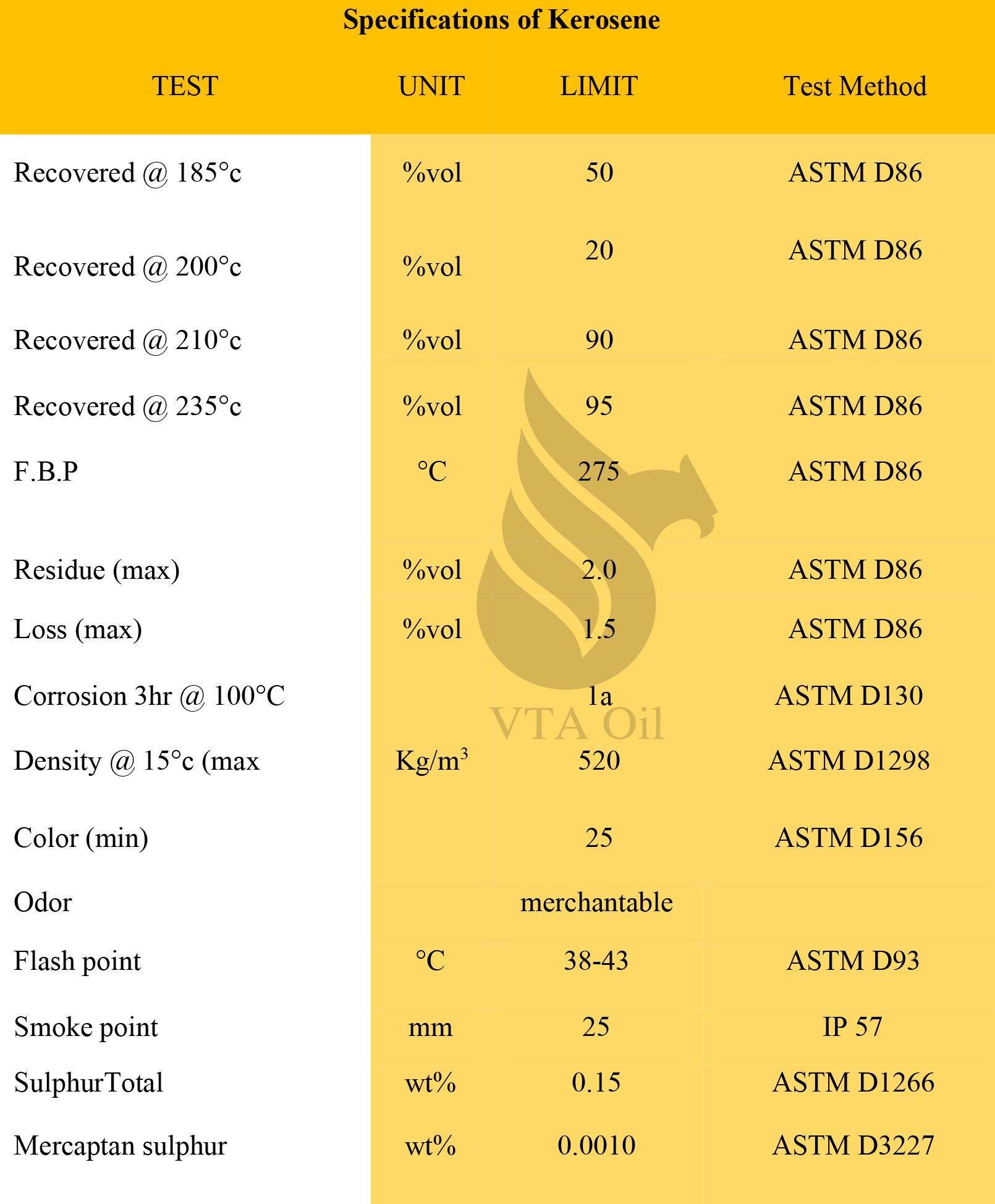
Kerosene, also known as paraffin or lamp oil, is a flammable hydrocarbon liquid derived from petroleum. It is a clear or slightly yellow liquid that is produced through the fractional distillation of crude oil, typically in the temperature range of 150–275°C (302–527°F).
Properties and Characteristics:
• Composition: Kerosene mainly consists of hydrocarbons with 10 to 16 carbon atoms per molecule.
• Density: It is less dense than water.
• Flammability: Kerosene is combustible but less volatile than gasoline, making it safer for storage and handling.
• Energy Content: It has a high energy density, which makes it an efficient fuel.
Uses of Kerosene:
1. Fuel for Lamps and Heating: Widely used in oil lamps, stoves, and heaters, especially in rural or off-grid areas.
2. Aviation Fuel: It serves as a base for jet fuel (Jet-A1 and Jet-B), thanks to its high energy content and low freezing point.
3. Cooking Fuel: In many developing countries, kerosene is used as a cooking fuel.
4. Industrial Applications: It is used as a solvent, lubricant, and in processes like metal cutting and cleaning.
5. Agriculture: Sometimes used